We've all interacted with chatbots. The kind that greets you on a website, answers a FAQ, maybe books a meeting. But something fundamentally different is happening now. A new class of AI — called agentic AI — has arrived, and it doesn't just respond to you. It acts for you.
AI agentic chatbots represent a paradigm shift. They don't sit and wait for the next prompt. They set goals, break them into tasks, use tools, check their own work, and autonomously drive a workflow to completion. The difference between a traditional chatbot and an agentic AI is the difference between a vending machine and a personal assistant.
What Is an AI Agentic Chatbot?
At its core, an AI agentic chatbot is a conversational AI system empowered with the ability to autonomously plan, reason, and take action across multiple steps — using tools, APIs, memory, and real-world integrations — to complete complex tasks with minimal human intervention.
Unlike classical rule-based or even modern LLM-powered chatbots that are essentially reactive — responding to each message in isolation — an agentic AI system maintains a persistent goal. It decides how to achieve that goal, selects tools, executes actions, evaluates results, and adapts its strategy. This is what makes it "agentic."
"An agentic AI doesn't just tell you what to do — it does it. That distinction is worth billions of dollars in efficiency across every industry on earth."
The term is derived from the concept of agency in cognitive science: the capacity of an entity to act independently in the world. Applied to AI, this means an agent can perceive its environment, form intentions, and take goal-directed actions — all autonomously.
Traditional Chatbots vs. Agentic AI
The leap from traditional chatbots to agentic AI is not incremental — it's architectural. Here's how they compare:
Traditional Chatbot
- Reactive — responds only when prompted
- Single-turn or shallow multi-turn logic
- Pre-scripted decision trees
- No real-world tool usage
- No memory between sessions
- Static, rigid workflows
- Cannot self-correct or adapt
AI Agentic Chatbot
- Proactive — initiates actions toward goals
- Persistent multi-step reasoning
- Dynamic, adaptive planning
- Full tool and API integration
- Long-term contextual memory
- Self-improving feedback loops
- Evaluates and corrects its own outputs
How AI Agentic Chatbots Work
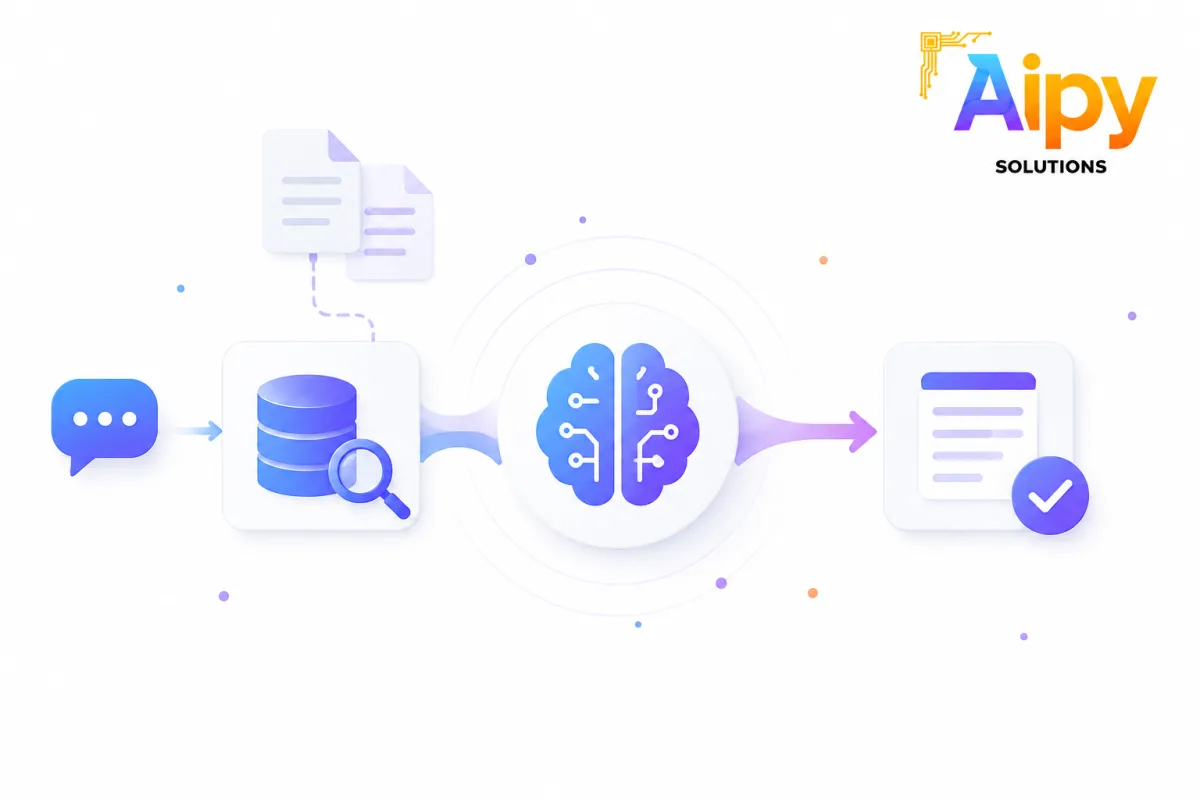
Understanding how agentic AI works internally helps demystify what can feel like science fiction. At its foundation, an agentic chatbot combines a powerful Large Language Model (LLM) with a set of architectural patterns that give it agency.
Goal Parsing & Intent Decomposition
The agent receives a high-level goal and breaks it into a structured sequence of actionable sub-tasks, reasoning step-by-step before taking action.
Tool Selection & Planning
The agent evaluates which tools it needs — database queries, web search, code execution, APIs — and builds a plan to use them in the right order.
Autonomous Execution
The agent executes each sub-task in sequence (or in parallel where possible), calling tools and storing intermediate findings in working memory.
Self-Evaluation & Reflection
After each major action, the agent evaluates whether the output meets quality criteria, flags inconsistencies, and retries or adjusts its approach.
Synthesis & Delivery
Once all sub-tasks are complete, the agent synthesizes the collected data and outputs a cohesive, human-readable result.
5 Core Capabilities That Define Agentic AI
Chain-of-Thought Reasoning
Agentic AI reasons through problems step-by-step before acting, catching errors in logic before they compound into costly mistakes.
Tool & API Use
Real-time web search, code execution, database reads/writes, CRM access, calendar management — the agent wields tools like an expert technician.
Persistent Memory
Unlike stateless chatbots, agentic systems maintain context across sessions — remembering user preferences, past decisions, and ongoing projects.
Multi-Agent Collaboration
Multiple specialized agents work in parallel — a researcher, a writer, a coder — coordinated by an orchestrator agent.
Adaptive Learning
The system learns from feedback and outcomes over time, continuously improving its performance on your specific domain and tasks.
Human-in-the-Loop Controls
Configurable approval gates and escalation protocols ensure humans remain in control for high-stakes decisions.
Real-World Use Cases Transforming Industries
The true measure of any technology is what it enables in practice. AI agentic chatbots are already being deployed across industries with measurable, transformative results.
- 01Customer Support Automation
An agentic support bot doesn't just answer questions — it pulls order data, initiates refunds, escalates complex cases, and follows up via email. Resolution time drops from hours to seconds.
- 02Software Development Assistance
Agentic coding assistants read codebases, write features, run tests, catch bugs, and submit pull requests — functioning as a tireless junior developer available 24/7.
- 03Business Intelligence & Research
Ask an agentic AI to research competitors, analyze market trends, and summarize findings in a presentation — within minutes it queries sources, synthesizes data, and delivers a polished report.
- 04HR & Recruitment Operations
From screening resumes and scheduling interviews to onboarding new hires — agentic AI handles end-to-end HR workflows with zero manual intervention for routine tasks.
- 05Sales & CRM Automation
Agentic sales assistants qualify leads, draft personalized outreach, log CRM entries, set follow-up reminders, and report pipeline health — eliminating 60–70% of sales admin overhead.
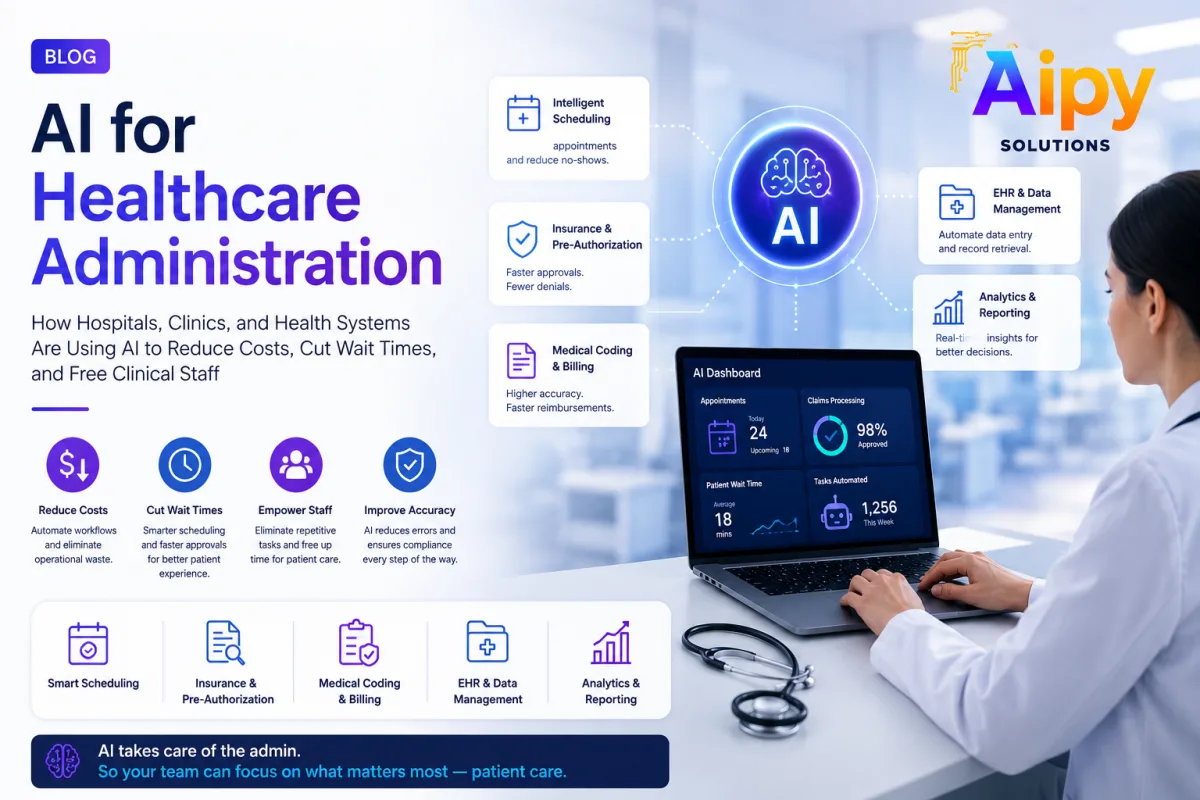
- 06Healthcare Administration
Patient intake, appointment scheduling, insurance pre-authorization, and clinical documentation — agentic AI streamlines administrative bottlenecks while keeping clinical staff focused on care.
Why 2025 Is the Inflection Point for Agentic AI
1. Reasoning Models Have Crossed a Threshold
The latest generation of large language models has demonstrated emergent reasoning capabilities that are qualitatively different from prior generations. These models can decompose complex problems, maintain multi-step plans, and catch their own errors — prerequisites for reliable agentic behavior.
2. Tool Infrastructure Has Matured
Standardized protocols for AI tool use (like Model Context Protocol, or MCP) have made it dramatically easier to connect AI agents to real-world systems — databases, APIs, browsers, file systems — with consistent, safe interfaces that enterprises can govern and audit.
3. Deployment Costs Have Plummeted
The economics of deploying AI have shifted radically. What required millions in compute two years ago now costs thousands. This makes agentic AI systems economically viable for mid-market companies.
"Every business function that can be described as a repeatable, multi-step process is now a candidate for agentic automation. The question isn't whether to adopt — it's how fast you can deploy."
How to Get Started with AI Agentic Chatbots
Implementing agentic AI doesn't require building from scratch. Here's a smart starting framework:
Identify Your High-Value Use Case
Start with one process that is high-volume, repetitive, well-defined, and currently expensive to staff. Customer support, data reporting, and sales follow-up are classic first deployments.
Audit Your Data & Systems
Map out which systems (CRM, ERP, databases, communication tools) the agent needs access to, and ensure APIs or connectors are available.
Define Success Metrics
Before deployment, establish KPIs: resolution rate, task completion time, error rate, human escalation frequency, cost per interaction.
Start Narrow, Then Expand
A focused, well-tuned agent for one workflow outperforms a general agent stretched thin across ten. Nail the first deployment, prove ROI, then expand scope.
Build in Governance from Day One
Define what actions require human approval. Log every agent action. Set up anomaly alerts. Responsible deployment is what separates durable AI programs from costly failures.
The Future: Where Agentic AI Is Heading
Multi-Agent Networks will become standard: constellations of specialized AI agents collaborating in real time, supervised by orchestration layers that route tasks, manage handoffs, and ensure coherent outputs across the full enterprise workflow stack.
Embodied Agents will bridge digital and physical worlds, controlling robotic systems, smart building infrastructure, and IoT networks — extending agentic automation beyond software into operations, logistics, and manufacturing.
Personalized Long-Term Agents will accumulate rich understanding of your business, your team, and your strategic goals over months and years — becoming institutional knowledge holders that outlast employee turnover.
The businesses that begin building agentic capabilities now — even modestly — will arrive at this future with a compounding head start.
Conclusion: The Age of Agency Has Arrived
AI agentic chatbots are not a future technology — they are a present-tense competitive reality. Organizations deploying them today are compressing timelines, reducing overhead, and delivering higher-quality outputs than was humanly possible before.
The shift from reactive AI (answer my question) to agentic AI (accomplish my goal) is arguably the most significant transformation in enterprise software since the advent of cloud computing. The companies that recognize this early — and act with urgency — will define the competitive landscape of the next decade.
The question is no longer whether AI agentic systems will reshape your industry. The question is whether you'll be leading that reshaping — or catching up to those who did.
Ready to Build Your AI Solution?
Our team designs, deploys, and scales AI systems around the workflows that matter most to your business.
Get a Free Consultation