What is MCP and Why Businesses Are Talking About It in 2026?
AIPY Solutions May 21, 2026 5 min read 89 views
AI systems are growing rapidly and becoming more powerful day by day. Businesses today are not only using AI chatbots but are also trying to connect AI with their applications, databases, APIs, internal tools, and workflows.
However, one major challenge still exists.
Most AI models work independently and do not directly understand how to interact with external systems, tools, or live business applications in a structured and secure way. For businesses, simply generating text responses is often not enough. Companies now need AI systems that can:
In simple terms, MCP is a standardized way that allows AI models to communicate with external tools, applications, APIs, databases, and business systems.
We can think of MCP as a bridge between LLMs and real-world applications.
Instead of building separate custom integrations for every tool or application, MCP provides a common protocol through which AI systems can interact with multiple systems in a more organized and scalable way.
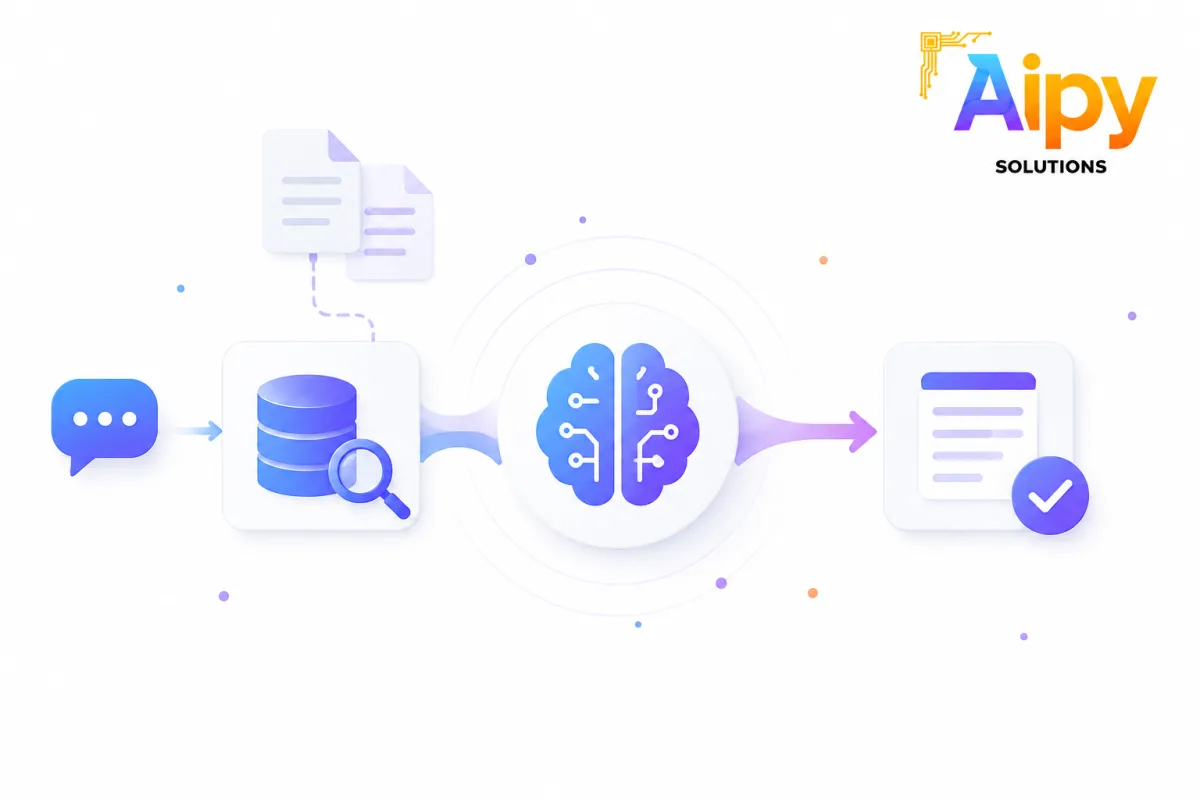
The complete MCP flow mainly involves:
Client
Protocol
Tools/Resources
AI Model
These components work together to help AI systems perform tasks beyond simple conversations.
Client
The first component in MCP is the Client. The client is basically the application or interface from which the user interacts with the AI system. This can be:
The client receives the user request and sends it forward for processing.
In simple terms:
User asks something
Client captures the request
Request is passed to the AI system through MCP
The client acts as the communication layer between the user and the AI-powered system.
Protocol
Now moving forward, we have Protocol. The protocol is one of the most important parts of MCP because it defines how communication happens between the AI model and external systems. In traditional AI applications, integrations are usually built separately for every service or tool. This becomes difficult to manage as systems grow. MCP solves this problem by introducing a common communication standard.
In simple terms:
AI sends requests using MCP rules
External tools understand the request
Response is returned in a structured format
This allows different systems to communicate with the AI model in a more reliable and scalable way.
The protocol also helps in:
maintaining structure
secure communication
tool discovery
standardized integrations
Tools and Resources
Now comes the most powerful part of MCP — Tools and Resources. Tools are external functionalities that the AI model can access through MCP. These can include:
databases
APIs
file systems
cloud services
calendars
email systems
business applications
Resources are the actual data or services provided by these tools.
For example:
retrieving data from a database
reading files
sending emails
checking calendars
accessing internal company documents
In simple terms:
MCP allows AI systems to use external tools
Tools provide data or perform actions
AI uses this information to complete user tasks
This helps businesses build AI systems that are much more useful than simple question-answer chatbots.
The AI model acts as the decision-making and reasoning engine in the complete MCP architecture.
Once the user request, tool information, and external resources are available, the AI model processes everything together and generates the final response.
In simple terms:
User sends request
MCP connects tools and resources
Required information is retrieved
AI model understands the complete context
Final response is generated
The major advantage here is that the AI model is no longer limited to only pre-trained knowledge.
Using MCP, AI systems can:
access live business data
perform real-time actions
communicate with applications
automate workflows
provide more accurate responses
This is why businesses are increasingly adopting MCP-based architectures to build scalable and intelligent AI systems.
Why Businesses Are Using MCP
Businesses are moving toward AI systems that can do more than simple conversations.
This makes MCP one of the most important emerging concepts in modern enterprise AI architecture.
Conclusion
As AI systems continue to evolve, businesses are looking for ways to make AI more connected, scalable, and useful in real-world applications. MCP provides a standardized approach that allows AI models to interact with tools, APIs, databases, and business systems more efficiently.
Instead of building isolated AI chatbots, organizations can now build intelligent AI ecosystems capable of understanding, retrieving, communicating, and performing actions across multiple systems. This is why MCP is becoming an important part of the future of enterprise AI.
Looking to build AI-powered solutions for your business? Visit AIPY Solutions
Ready to Build Your AI Solution?
Our team designs, deploys, and scales AI systems around the workflows that matter most to your business.